Have you ever wondered which countries supply the meat sold at ALDI? I had the same question, so I visited a store and examined the packaging to see what I could discover about where its meat and seafood come from.
Knowing where your meat comes from isn’t always as straightforward as you might expect. While some grocery products clearly identify their country of origin, others provide little information about where they were raised, harvested, or processed.
Earlier this month, I visited an ALDI store to investigate the origins of its fresh beef, chicken, pork, and seafood. Rather than relying on assumptions, I examined the information printed directly on the packages.
My investigation focused exclusively on fresh products, so I didn’t look into the origins of any frozen meat or seafood during this visit.
Here’s what I discovered.
Beef: Country of Origin Wasn’t Clearly Identified
I recently explored this subject in a separate NewsBreak article titled I Checked ALDI’s Beef to See Where It Comes From – Here’s What I Found.
During my visit, I couldn’t find any country-of-origin information on the fresh beef packages I examined. None of them displayed a “Product of U.S.A.” label or clearly identified another country as the source.
ALDI does sell beef labeled USDA Organic and USDA Choice, but those designations shouldn’t be confused with country-of-origin information.
USDA Organic certification relates to specific production standards, while USDA Choice identifies a beef quality grade. Neither designation, by itself, confirms that the beef originated in the United States.
However, the absence of a country-of-origin statement doesn’t necessarily mean the beef was imported.
It’s entirely possible that some or all of the beef came from American producers. Retailers may also work with different suppliers depending on availability, which could affect where their products originate.
Unfortunately, without a clear statement on the packaging, shoppers have no easy way to determine the exact source.
Chicken: Every Package I Checked Said “Product of U.S.A.”
Chicken was a completely different experience.
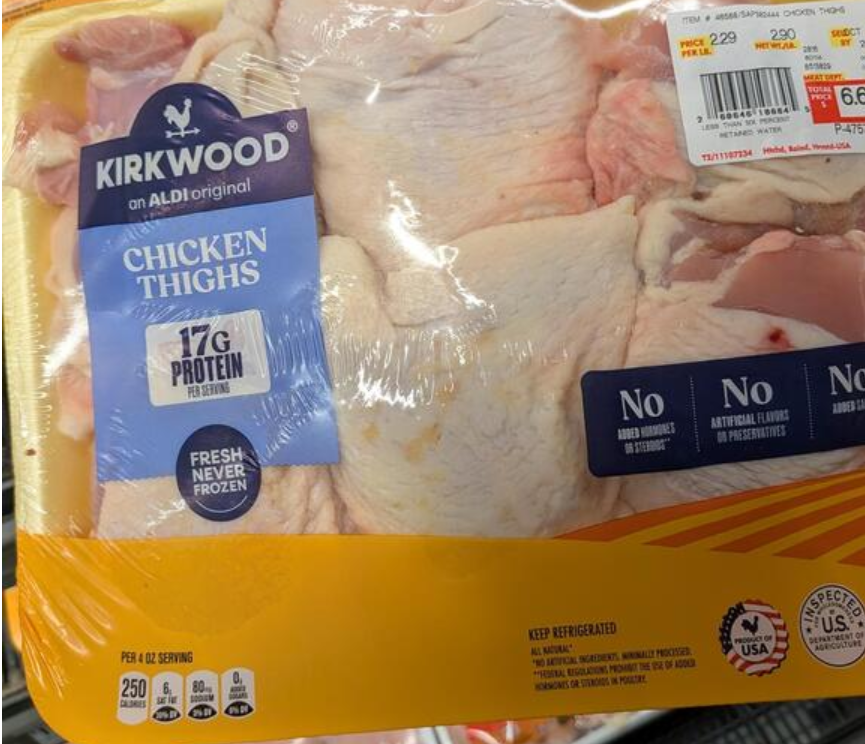
Every fresh chicken product I examined at ALDI carried a “Product of U.S.A.” label. This included whole chickens, chicken breasts, thighs, and drumsticks.
That label has a specific meaning under updated USDA guidelines.
According to the USDA’s voluntary Product of USA labeling standards, which took effect on January 1, 2026, meat carrying this claim must come from animals that were born, raised, harvested, and processed entirely within the United States.
Using the label is voluntary, meaning producers aren’t required to display it. However, companies choosing to make the claim must meet the applicable requirements.
For shoppers who prefer domestically sourced chicken, this labeling makes it much easier to identify products that meet their preferences.
Pork: Origin Information Varied by Product
I expected ALDI’s fresh pork products to have country-of-origin labels similar to those on its chicken.
Surprisingly, that wasn’t consistently the case.
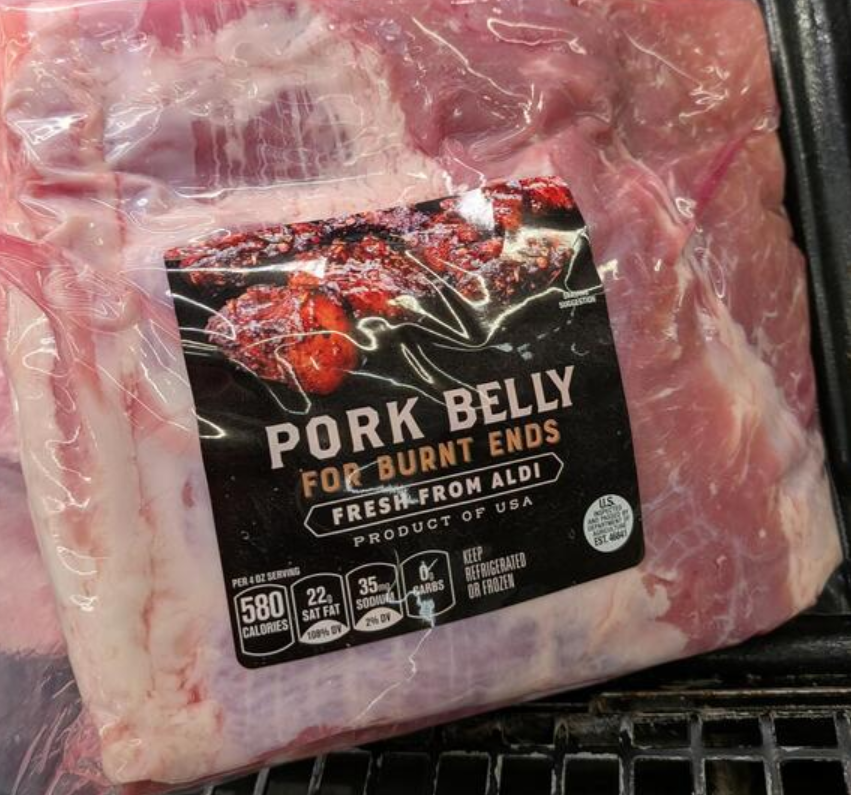
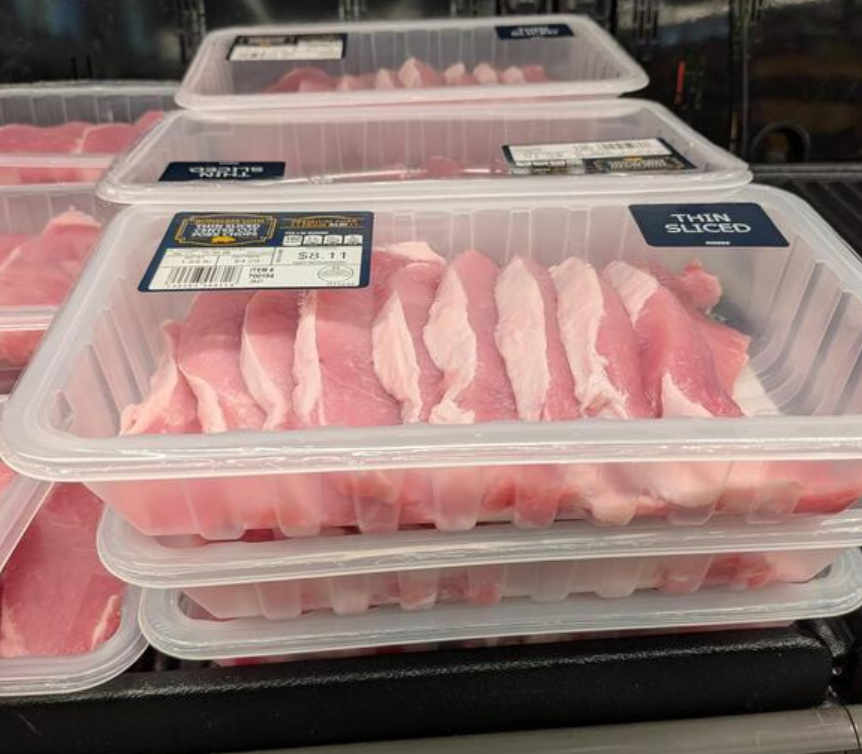
The packages of pork chops I examined didn’t clearly identify where the pork originated. However, I did find country-of-origin information on a package of pork belly.
This suggests that labeling can vary between different pork products, even within the same store.
If knowing where your pork comes from matters to you, it’s worth checking each individual package rather than assuming that every product has the same origin.
Fish: More Details About Where Seafood Comes From
Seafood packaging generally provides more information about origin than the meat products I examined.
One important distinction shoppers should understand is the difference between where seafood is caught or raised and where it is processed.
For example, a package marked “Processed in the U.S.A.” doesn’t automatically mean the fish was caught in American waters.
It simply identifies where processing took place.
The fresh salmon I examined at ALDI included processing information along with details about its origin, making it easier to understand where the fish came from.
This information can be particularly valuable for seafood shoppers.
The location where fish are caught or farmed may influence purchasing decisions, especially for consumers concerned about sustainability, overfishing, and environmental practices.
Where Does ALDI’s Salmon Come From?
ALDI offers several varieties of salmon, and the packages I examined showed different countries of origin.
I noticed salmon associated with two countries, demonstrating that the retailer doesn’t necessarily rely on a single source for all its salmon products.
One interesting example is Atlantic salmon sourced from Chile.
At first, that might sound confusing. Chile borders the Pacific Ocean, so why would salmon raised there be called Atlantic salmon?
The explanation is simple: Atlantic salmon refers to the species, not necessarily the location where the fish was raised.
Atlantic salmon can be farmed in Chile even though the species is native to the North Atlantic.
Think of Granny Smith apples. Although the variety originated in Australia, these apples are now grown in Washington state and many other regions around the world.
The same basic principle applies to farm-raised Atlantic salmon.
ALDI’s Fresh Steelhead Trout Comes From Peru
Another seafood product that caught my attention was ALDI’s fresh, never-frozen steelhead trout.
According to the packaging I examined, this trout originated in Peru.
This is another example of how seafood sold in American grocery stores can come from international suppliers.
For consumers who pay attention to sourcing, checking the label can reveal details they might not otherwise expect.
Why Country-of-Origin Labels Matter
My visit to ALDI highlighted how differently origin information can appear across meat and seafood categories.
Chicken packaging was the most straightforward, with every product I checked clearly displaying a “Product of U.S.A.” statement.
Beef was less transparent, as I couldn’t identify a country of origin from the packages I examined.
Pork fell somewhere in between, with some products displaying origin information and others offering no clear indication.
Seafood generally provided more detailed sourcing information, including where certain fish were raised or caught and where processing occurred.
Of course, these observations reflect the products available during one store visit. Packaging, suppliers, and sourcing practices may vary by location and over time.
For shoppers interested in supporting domestic producers, understanding food supply chains, or making more informed purchasing decisions, reading the packaging remains a useful starting point.
Final Thoughts
Finding out where grocery store meat comes from can require more detective work than expected.
My experience at ALDI showed that some products make their origins easy to identify, while others leave shoppers with unanswered questions.
The biggest lesson from this visit is that country-of-origin information isn’t always presented consistently across different types of meat.
If sourcing matters to you, take a few extra seconds to examine the packaging before adding a product to your cart.
What about you? Does the country of origin influence which meat or seafood you buy? Share your thoughts in the comments.

Robert J. Anaya is a writer and editor at WAMB Radio, covering local news and crime news for Wabash-area communities and Rockville. He is committed to reporting accurate, fact-checked, and timely stories that help local readers stay informed and safe.