NEW YORK CITY — New York taxpayers could benefit from several federal tax changes in 2027, including higher standard deductions, larger tax credits for families and updated income tax brackets.
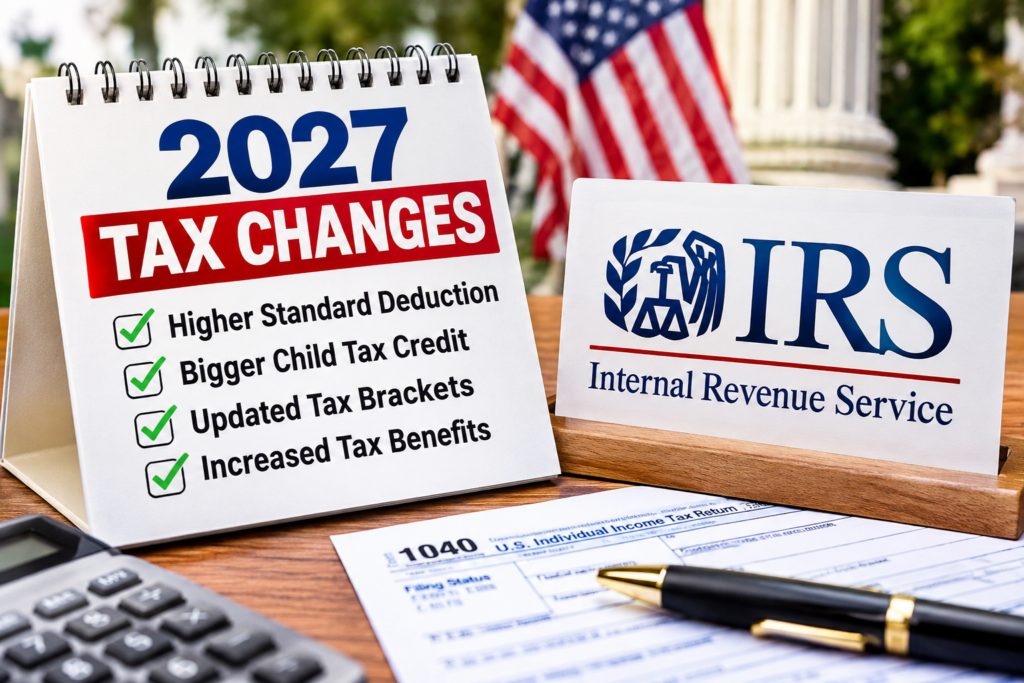
The Internal Revenue Service (IRS) has announced inflation adjustments to nearly 70 parts of the federal tax code. These changes are designed to help Americans keep more of their income as living costs continue to rise.
Under the new rules, married couples filing jointly will receive an additional $1,000 in standard deductions. Families with qualifying children may also receive larger tax credits, while workers could benefit from increased limits on certain health and transportation benefits.
However, these changes will not apply to 2026 tax returns filed in early 2027. The updated tax rules will take effect for the 2027 tax year, with returns generally filed in 2028.
Here is a simple breakdown of the major IRS changes and how they could affect New York residents.
Standard Deduction Increases for 2027
One of the biggest changes for 2027 is an increase in the standard deduction.
The standard deduction allows taxpayers to reduce their taxable income without listing individual expenses. A higher deduction means less income may be subject to federal income tax.
The IRS has increased the standard deduction for every major filing category.
| Filing Status | 2027 Standard Deduction | Increase From 2026 |
|---|---|---|
| Married filing jointly | $33,200 | $1,000 |
| Single filers | $16,600 | $500 |
| Head of household | $24,925 | $775 |
| Married filing separately | $16,600 | $500 |
For example, a married couple with an adjusted gross income of $100,000 could reduce their taxable income to $66,800 by claiming the standard deduction, assuming no other adjustments.
Similarly, a single taxpayer earning $100,000 could reduce taxable income to $83,400.
Older adults and taxpayers who are legally blind may qualify for additional deductions, which could lower their taxable income further.
Child Tax Credit Increases to $2,300 in 2027
Families with children may receive additional financial relief under the new IRS adjustments.
The maximum federal Child Tax Credit will increase from $2,200 in 2026 to $2,300 per qualifying child in 2027.
The refundable portion of the credit will also rise from $1,700 to $1,800.
A refundable tax credit can provide a refund to eligible taxpayers even when they owe little or no federal income tax.
However, not every family will qualify for the full amount. Eligibility depends on factors such as household income, the child’s age and other IRS requirements.
For qualifying families, the increase could provide additional financial support for everyday expenses.
Earned Income Tax Credit Will Also Increase
The Earned Income Tax Credit (EITC) is another important benefit for low- and moderate-income workers.
For 2027, the maximum EITC for taxpayers with three or more qualifying children will increase to $8,496, compared with $8,231 in 2026.
This represents an increase of $265.
Workers with one or two qualifying children may also qualify for higher credits. Eligible workers without children could benefit from updated credit amounts as well.
The amount a person receives depends on their income, filing status and number of qualifying children.
The EITC is intended to reduce the tax burden on working households and may result in a refund for eligible taxpayers.
Health Savings and Workplace Benefits Get Higher Limits
Workers who use employer-sponsored health flexible spending arrangements (FSAs) will be able to save more money before taxes in 2027.
These accounts allow employees to set aside part of their earnings to pay for eligible medical expenses.
The annual health FSA contribution limit will increase to $3,500, up from $3,400 in 2026.
For plans that allow unused money to carry over into the following year, the maximum carryover amount will rise from $680 to $700.
The IRS is also increasing certain workplace transportation benefits.
Employees who receive qualifying employer-provided transportation or parking benefits will have a monthly tax-free limit of $350, an increase of $10.
These changes could help workers manage healthcare and commuting expenses more effectively.
Federal Income Tax Brackets Change for 2027
The IRS is also raising income thresholds across all seven federal income tax brackets.
The federal income tax rates will remain:
10%, 12%, 22%, 24%, 32%, 35% and 37%.
Although the rates are unchanged, the income ranges covered by each bracket will increase.
This adjustment helps prevent inflation-related salary increases from automatically pushing more income into higher tax brackets.
Importantly, the United States uses a progressive tax system. This means that when a taxpayer enters a higher tax bracket, only the income above that bracket’s threshold is taxed at the higher rate.
The person’s entire income is not taxed at the highest applicable rate.
2027 Federal Tax Brackets for Married Couples Filing Jointly
Married couples filing a joint federal income tax return will use the following taxable income brackets in 2027.
| Taxable Income | Federal Tax Rate |
|---|---|
| $0 – $25,600 | 10% |
| $25,601 – $104,050 | 12% |
| $104,051 – $218,250 | 22% |
| $218,251 – $416,650 | 24% |
| $416,651 – $529,100 | 32% |
| $529,101 – $793,650 | 35% |
| Above $793,650 | 37% |
These percentages apply only to the portion of taxable income that falls within each bracket.
For example, a married couple with taxable income above $104,050 will not pay 22% on all their income. Only the portion exceeding that threshold, up to the next bracket limit, will be taxed at 22%.
2027 Federal Income Tax Brackets for Single Filers
Single taxpayers will also benefit from higher income thresholds.
The updated 2027 federal tax brackets for single filers are:
| Taxable Income | Federal Tax Rate |
|---|---|
| $0 – $12,800 | 10% |
| $12,801 – $52,025 | 12% |
| $52,026 – $109,125 | 22% |
| $109,126 – $208,325 | 24% |
| $208,326 – $264,550 | 32% |
| $264,551 – $661,375 | 35% |
| Above $661,375 | 37% |
These adjustments may allow some taxpayers to keep more of their earnings before moving into a higher marginal tax bracket.
However, the actual amount saved will depend on individual income, deductions, credits and other financial circumstances.
Adoption Tax Credit Increases in 2027
Families planning to adopt a child may also benefit from the updated federal tax rules.
The maximum adoption tax credit will increase to $18,250 in 2027.
Of this amount, up to $5,280 may be refundable for eligible taxpayers.
The credit is designed to help qualifying families cover certain adoption-related expenses.
Eligibility rules and income limits still apply, so families should review the IRS requirements before claiming the credit.
Gift and Estate Tax Limits Rise
The IRS is increasing the federal gift tax and estate tax exclusion amounts for 2027.
The annual gift tax exclusion will rise from $19,000 to $20,000 per recipient.
This generally allows an individual to give up to $20,000 to another person during the year without using their lifetime gift and estate tax exemption.
The federal estate tax exclusion will also increase from $15 million in 2026 to $15.48 million in 2027.
These changes may be especially relevant to people planning to transfer substantial assets or manage large estates.
Small Businesses Can Deduct More Equipment Costs
Small business owners may benefit from a higher Section 179 deduction limit in 2027.
The maximum deduction for qualifying business equipment and property will increase to $2.64 million.
Section 179 allows eligible businesses to deduct the cost of certain qualifying purchases rather than spreading the deduction over several years.
However, the deduction is subject to IRS restrictions, including qualifying property requirements and applicable limits.
Business owners should review the rules before making major purchases based on the increased deduction.
Foreign Earned Income Exclusion Increases
Americans who work and earn income outside the United States may also receive additional tax relief.
The foreign earned income exclusion will increase from $132,900 in 2026 to $137,300 in 2027.
This provision allows qualifying U.S. taxpayers working abroad to exclude a certain amount of foreign earned income from federal income taxation.
Eligibility depends on meeting specific IRS requirements related to foreign residence or physical presence.
Which Tax Rules Will Stay the Same in 2027?
Although many federal tax provisions are increasing, some rules will remain unchanged.
Personal exemptions will continue to be set at zero.
The income thresholds used to determine eligibility for the Lifetime Learning Credit will also remain the same.
This means not every taxpayer will receive additional savings from the 2027 adjustments.
When Will the New IRS Tax Rules Take Effect?
The updated deductions, tax brackets and credits will apply to income earned during the 2027 tax year.
Most taxpayers will see these changes reflected when they file their 2027 federal income tax returns in 2028.
The adjustments will not apply to 2026 federal income tax returns filed in early 2027.
Taxpayers should also remember that these are federal tax changes. New York state and local income tax rules are separate and may follow different deduction amounts, credits and tax brackets.
How Can New York Taxpayers Prepare for the 2027 Changes?
Taxpayers can prepare by reviewing their expected income, filing status and eligibility for deductions or tax credits.
Families should check whether they qualify for the increased Child Tax Credit or Earned Income Tax Credit.
Employees may also want to review their workplace health spending accounts and transportation benefits to understand the new contribution limits.
People who own businesses, have large estates or earn income abroad should consider how the updated limits may affect their tax planning.
For complete details, taxpayers can review the official IRS 2027 inflation adjustments.
The IRS’s 2027 tax adjustments could provide financial relief to millions of Americans, including New York residents.
Higher standard deductions, larger child tax credits and updated income tax brackets may help eligible taxpayers reduce their federal tax bills.
Workers, adoptive families, small business owners and Americans earning money overseas may also benefit from increased tax limits.
However, the amount each person saves will depend on their financial situation and eligibility for specific tax benefits.
With the new rules taking effect in 2027, taxpayers have time to understand the changes and prepare before filing their returns in 2028.

Robert J. Anaya is a writer and editor at WAMB Radio, covering local news and crime news for Wabash-area communities and Rockville. He is committed to reporting accurate, fact-checked, and timely stories that help local readers stay informed and safe.